CT Scan: When Computed Tomography Is Recommended and What It Can Detect
Reviewed by Ivanna Leonidovna Oleynik, Ultrasound Diagnostics Specialist, First Category Radiologist updated: 7 August 2025
Computed tomography (CT) is one of the most accurate diagnostic imaging methods available in modern medicine. It provides detailed images of internal organs, bones, blood vessels, and soft tissues within a short period of time. Thanks to its high diagnostic accuracy, CT scanning is widely used across multiple medical specialties to detect diseases, assess traumatic injuries, and monitor treatment outcomes. A timely CT examination helps physicians establish an accurate diagnosis, determine the most appropriate treatment strategy, and improve patient outcomes.
What Is Computed Tomography?
Computed tomography is an advanced diagnostic imaging technique that uses X-rays and specialized computer software to produce detailed cross-sectional images of the body. Unlike conventional X-ray imaging, CT creates three-dimensional views of the examined area, significantly improving diagnostic accuracy.
Modern CT scanners provide high-quality imaging while minimizing scanning time. When necessary, the examination may be performed with intravenous contrast material, allowing physicians to evaluate blood vessels, internal organs, and tumors in greater detail.
Learn more about computed tomography follow the link
When Is a CT Scan Recommended?
A CT scan is recommended after a medical consultation when additional imaging is needed to confirm a diagnosis or evaluate the extent of disease or injury. It is commonly used in both routine and emergency medical care.
The main indications for CT imaging include:
- head, chest, or abdominal injuries
- persistent headaches or dizziness
- suspected tumors
- lung diseases
- abdominal disorders
- spinal and joint conditions
- vascular diseases
- monitoring treatment effectiveness
- preoperative assessment.
CT plays a particularly important role in oncology because it helps determine the size of a tumor, its exact location, and whether the disease has spread.
How Is a CT Scan Performed?
Before the examination, the patient meets with a physician who reviews their medical history, allergies, underlying medical conditions, and any possible contraindications. If contrast-enhanced CT is planned, additional laboratory tests may be required.
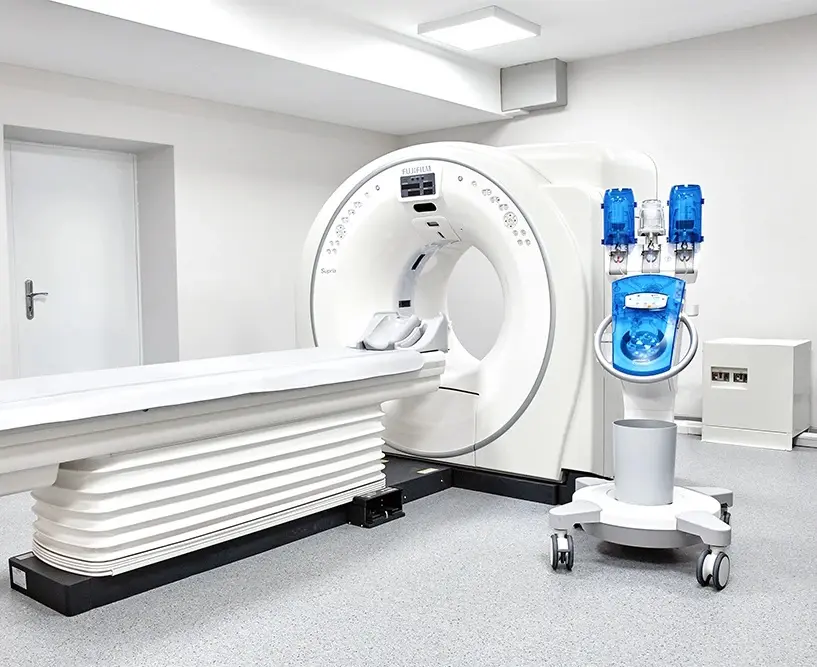
During the procedure, the patient lies on a motorized table that moves smoothly through the circular opening of the CT scanner. The scan typically takes anywhere from a few minutes to 20–30 minutes, depending on the area being examined. Remaining still during the scan is essential to obtain clear, high-quality images.
The examination is painless and well tolerated by most patients. Unless otherwise advised by the physician, patients can return to their normal daily activities immediately after the procedure.
What Can a CT Scan Detect?
CT imaging is used to diagnose a wide variety of medical conditions. It can detect fractures, internal bleeding, inflammatory diseases, congenital abnormalities, cysts, benign and malignant tumors, diseases of the lungs, abdominal organs, spine, and blood vessels.
When cancer is diagnosed, CT findings help physicians determine the most appropriate treatment plan and the extent of surgical intervention required. Modern oncologic surgery techniques may then be used. Learn more about oncologic surgery follow the link. If abnormalities of the brain or spinal cord are detected, further treatment may involve neurosurgical specialists. Learn more about neurosurgery follow the link
Preparation and Medical Recommendations
Preparation for a CT scan depends on the body area being examined and whether contrast material will be used. Before certain types of CT examinations, patients may be asked to avoid eating for several hours and should inform their physician about chronic illnesses, pregnancy, allergies, and any medications they are taking.
After a contrast-enhanced CT scan, patients are generally advised to drink plenty of fluids to help eliminate the contrast agent from the body. The images are interpreted by a radiologist, after which the patient receives a diagnostic report along with recommendations for further evaluation or treatment.
Computed tomography is an essential tool in modern radiology that enables early disease detection, accurate diagnosis, and timely treatment. Following your physician's recommendations and undergoing CT imaging when indicated contributes to better health outcomes and improves the effectiveness of medical care.

Was this article helpful?
Thank you for rating.
Prices
Frequently asked questions
We recommend undergoing a CT scan if you have:
- prolonged or frequent headaches, dizziness, visual disturbances
- head, spine, or limb injuries
- suspected pneumonia, complications after COVID, or tuberculosis
- chest pain, shortness of breath, or coughing for no apparent reason
- abdominal pain of unknown origin
- suspected neoplasms
- follow-up after surgery or treatment
- desire to undergo a preventive examination
Types of computed tomography we perform
- CT scan of the brain
- CT scan of the chest
- CT scan of the abdomen and pelvis
- CT scan of the kidneys and urinary system
- CT scan of the spine (cervical, thoracic, lumbar)
- CT scan of the joints
- CT scan of the whole body
We offer conventional computed tomography and CT scans with contrast agent administration
How CT scans are performed at Helios:
Make an appointment by calling
Appointments at a convenient time without queues
Examination — you simply lie down while the tomograph works quietly and quickly
A radiology specialist interprets the results
Why choose Helios
State-of-the-art equipment — maximum image accuracy
Minimal radiation exposure
Fast results — in just a few minutes
Professional team of radiologists
No waiting in line
Comfortable atmosphere and friendly staff
At Helios, we care about diagnostic accuracy Your peace of mind and safety
Still have questions?
Leave your details and a doctor will call you back.