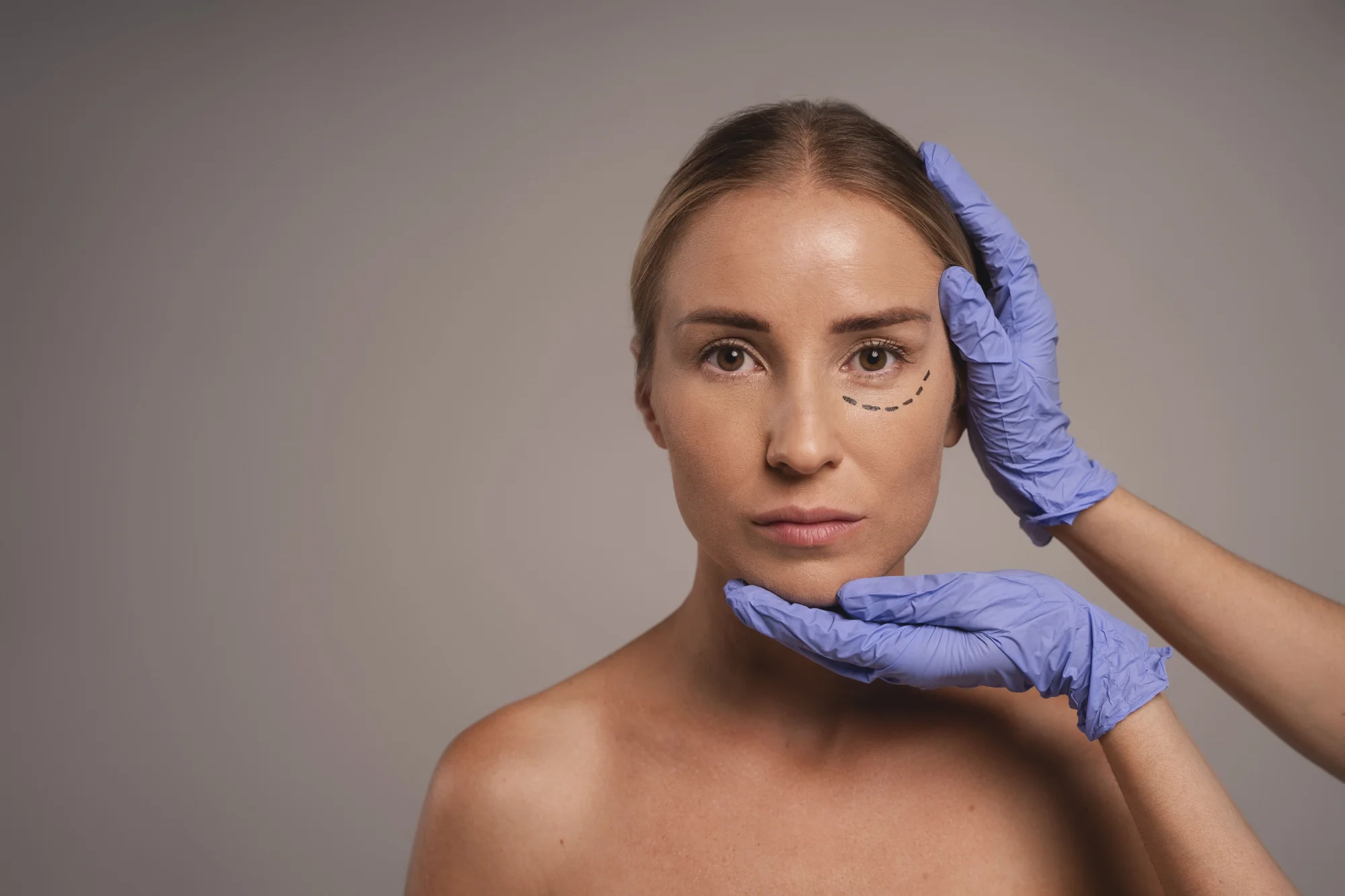
When should you consider the procedure?
- Pronounced under-eye bags
- Excess skin or wrinkles in the lower eyelid area
- A tired or sad facial expression due to aging changes
- Fat herniation in the lower eyelids
Who lower blepharoplasty is for
The operation solves three problems: fat hernias (bags), excess skin and a pronounced tear trough that keeps a shadow under the eyes. It is appropriate when the puffiness is not related to the kidneys or thyroid and does not resolve after sleep — that is, when it is anatomical.
A separate indication is lower-lid blepharochalasis, where the skin loses elasticity and gathers into folds. Before surgery the surgeon checks lower-lid tone: if the supporting ligaments are lax, a tightening is added, otherwise the lid margin may droop.
How it is performed
If only fat hernias need removing, a transconjunctival approach is used — an incision on the inner surface, with no external suture. Where skin is in excess, the incision runs below the lash line. Surgery is performed under local anaesthesia with sedation and takes 40–60 minutes. The price depends on the approach and extent — see below.

Prices
Doctors
All Doctors


How is the consultation going?
The transconjunctival approach works from inside the lid: no external scar remains at all and recovery is faster. It can only address fat hernias, however, and does not remove excess skin.
An incision under the lashes allows skin to be excised and fat redistributed at the same time. The scar lies 1–2 mm from the lash margin and is practically invisible after a few months. The surgeon chooses at examination, based on what is actually creating the bags.
Bruising and swelling peak on day 2–3 and then subside. By day 10–14 most people return to work and social activity; make-up can be used from around day 10.
The thin eyelid skin settles more slowly, so the final result is judged at 2–3 months. For the first 2 weeks avoid bending, exertion, saunas and pools, and sleep on a high pillow.