What are nasal polyps and why do they occur?
Polyps of the nose are benign growths of the mucous membrane that develop in the nasal cavity or sinuses. On their own they are painless, but when they reach a significant size they block the nasal passages and disrupt sinus drainage. Polyposis is based on chronic inflammation of the mucous membrane, most often associated with allergies, bronchial asthma, or chronic sinusitis.
When is polyp removal required?
Surgical treatment is indicated when drug therapy is ineffective or when polyps are large. It is worth consulting an ENT doctor in the following cases:
- persistent nasal congestion that lasts for months despite treatment;
- progressive decline or complete loss of the sense of smell;
- constant headaches and pressure in the forehead and cheek area;
- recurrent sinusitis caused by polyposis;
- a sensation of fullness or pressure in the nose.
In cases of concurrent involvement of the maxillary sinuses, endoscopic maxillary sinusotomy is performed at Helyos Medical Center together with polypectomy. This makes it possible to comprehensively eliminate the cause of chronic inflammation in a single surgical intervention.
Indications for endoscopic polypectomy
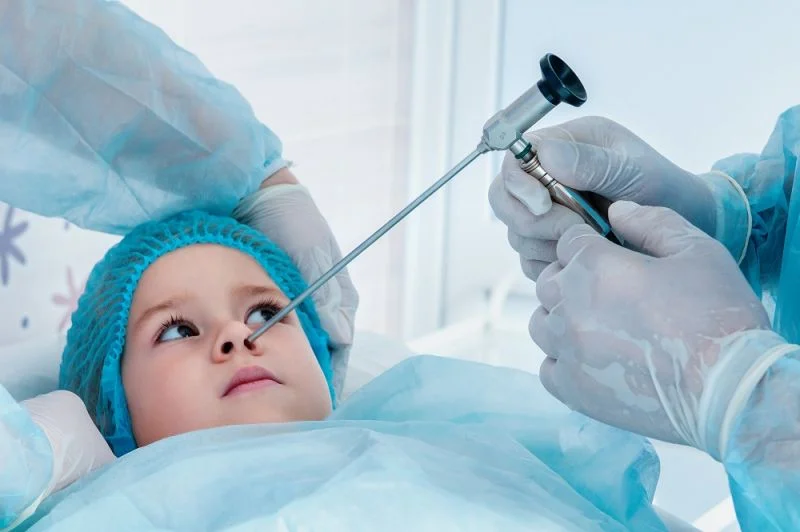
The decision on the operation is made after an ENT examination, nasal endoscopy, and sinus CT. It is CT that makes it possible to assess the extent of the polyposis and determine the scope of the surgical intervention. Indications for polypectomy:
- pronounced breathing impairment;
- spread of polyposis into the sinuses;
- ineffectiveness of conservative therapy for 3 or more months.
If the ethmoid labyrinth is affected, endoscopic ethmoidotomy is performed during the same operation — opening the cells for drainage and cleaning.
How is nasal polyp removal surgery performed?
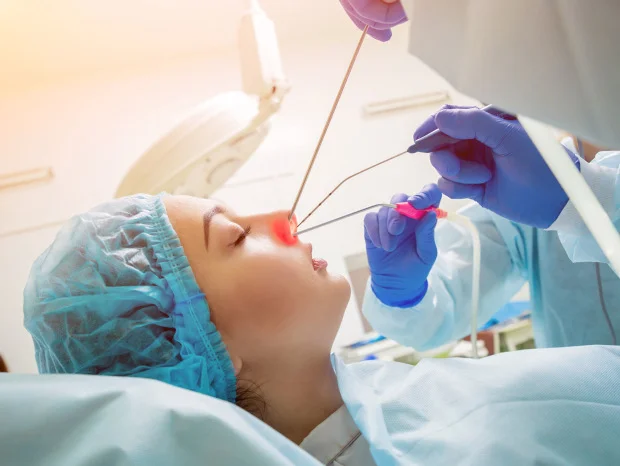
During the operation, the surgeon carefully removes the polypous tissue through the nasal passages under endoscopic guidance — without external incisions. The surgical intervention is performed under general anesthesia and lasts 30–90 minutes. Most patients go home on the day of the operation or the following day, can return to work after 5–7 days, and full recovery takes 4–6 weeks.
Rehabilitation after endoscopic polypectomy
The first days after surgical endoscopy are accompanied by congestion and moderate discomfort. Saline nasal rinses are started as early as day 2–3. They speed up cleansing of the mucous membrane and prevent crust formation.
Important! After the operation, it is necessary to continue using topical steroid sprays. They reduce the risk of polyps regrowing. The doctor will select the medication and dosing schedule individually at the appointment.
Benefits of treating nasal polyps at Helyos Medical Center
At Helyos Medical Center, patients with polyposis receive care at every stage — from the initial ENT consultation and AI-assisted CT diagnostics to surgical intervention and rehabilitation. A wide range of ENT operations is performed here, including tonsillotomy for tonsil hypertrophy.
You can book an appointment, check the price of the operation, or find out how much treatment costs in your case by calling +380670000150 or via the online form on the website. Consulting a doctor at the first symptoms of polyposis allows you to choose the right treatment approach at an early stage and avoid complications.