What are hemorrhoids and why do they develop?
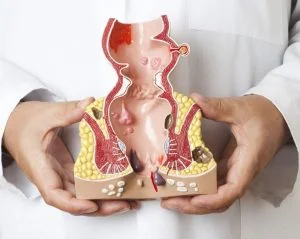
Hemorrhoids are a pathological enlargement of the hemorrhoidal venous plexuses in the rectum and anal canal. Factors that contribute to the development of hemorrhoids include:
- chronic constipation;
- a sedentary lifestyle;
- sedentary work;
- pregnancy and childbirth;
- an unbalanced diet lacking in fiber.
Hemorrhoids are often combined with an anal fissure. At Helyos Medical Center, this condition is treated with vaporization, if necessary within a single surgical intervention.
When is surgical treatment of hemorrhoids required?
The decision on surgery is made individually after consultation and examination by the proctologist. Surgical treatment is generally recommended starting from stage 3 hemorrhoids, when the nodes prolapse and no longer retract on their own, as well as in cases of frequent bleeding, thrombosis of the nodes, and pronounced pain.
Advice. Discomfort, blood-tinged discharge, and a sensation of a foreign body are reasons to see a proctologist. Treatment is much simpler and quicker at earlier stages.
Methods for removing hemorrhoids
Modern proctology offers several methods of surgical treatment for hemorrhoids. The choice depends on the stage of the disease, the severity of symptoms, and the patient's overall condition.
- Hemorrhoidectomy — the classic removal of hemorrhoids with a scalpel. Usually requires hospitalization for 1–2 days. The method has a low risk of recurrence and is used for pronounced forms of hemorrhoids.
- Laser hemorrhoidectomy — performed on an outpatient basis or with a 1-day hospital stay. The laser simultaneously removes the nodes and coagulates the vessels, which reduces blood loss and promotes faster tissue healing.
- The Longo method — involves a 1-day hospital stay. During the operation, a stapled fixation of the nodes is performed while preserving the anatomy of the anal canal. This method is more often used for internal hemorrhoids.
- Thrombectomy — an outpatient procedure in which a clot is removed from an external hemorrhoidal node. Performed for acute thrombosis. It quickly reduces pain and shortens the recovery period.
The optimal treatment method is determined after examination by the proctologist and assessment of the disease stage. Modern surgical techniques help reduce the trauma of the intervention and speed up the patient's recovery.
How is hemorrhoid surgery performed?
The operation is performed under general or spinal anesthesia. At Helyos Medical Center priority is given to minimally invasive techniques: laser surgery and the Longo method (hemorrhoid pexy), which achieve a reliable result with minimal discomfort for the patient.
Rehabilitation after hemorrhoid removal
After laser surgery or the Longo method, most patients return to their normal life within 5–7 days. After classic hemorrhoidectomy, rehabilitation takes up to 2 weeks. In the first days after surgery, it is important to follow a fiber-rich diet and avoid constipation and physical exertion.
Important! After hemorrhoid removal, accompanying conditions are often discovered. If necessary, Helyos Medical Center performs removal of anal skin tags — on an outpatient basis, under local anesthesia.
Advantages of treatment at Helyos Medical Center
The proctologists at Helyos Medical Center have a full range of surgical methods for treating hemorrhoids — from minimally invasive to classic. The choice of approach is based on examination results and modern treatment protocols. After surgery, each patient receives individual rehabilitation recommendations. To book an appointment with the doctor, find out the price of the surgery, or find out how much treatment for hemorrhoids costs in a particular case, call +380670000150 or use the online form on the website.