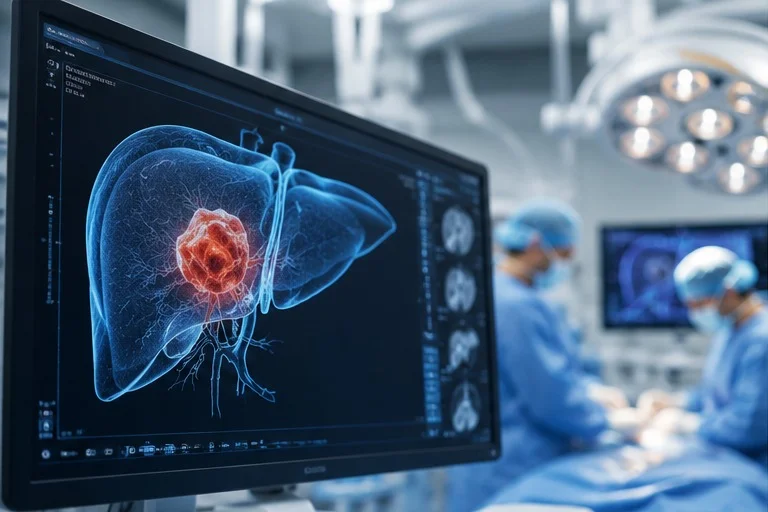
What liver cancer is and its types
Malignant tumors of the liver are divided into primary and secondary. Primary cancer develops directly from the organ's cells. The most common form is hepatocellular carcinoma, which most often arises against a background of chronic viral hepatitis B and C and other chronic liver diseases.
Secondary tumors, or metastases, form when malignant cells spread from other organs. The liver is particularly vulnerable to metastasis because a large volume of blood from the abdominal organs passes through it.
Medical fact: hepatocellular carcinoma ranks fourth among causes of cancer mortality worldwide. At the same time, according to European and American clinical guidelines, liver resection remains the gold standard of treatment for operable forms of the disease.
Methods for diagnosing liver tumors
Accurate diagnostics determine the treatment strategy, the extent, and the level of complexity of the surgical intervention. At Helyos Medical Center, liver tumor diagnostics are performed on modern equipment with AI support. This increases the accuracy of image interpretation and helps the surgeon plan the operation in detail.
The standard diagnostic protocol includes:
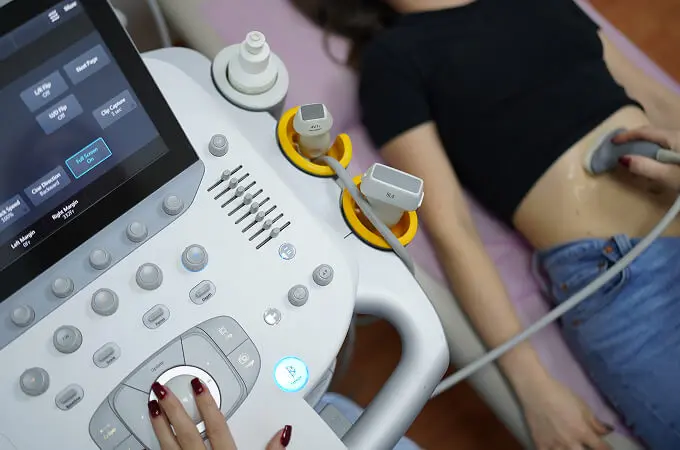
- abdominal ultrasound;
- contrast-enhanced CT to assess the size, location, and extent of the tumor;
- laboratory blood tests, including tumor markers (AFP, CA 19-9);
- a biopsy when morphological confirmation of the diagnosis is needed.
All examinations are performed on-site at Helyos Medical Center. An in-house laboratory ensures prompt test results.
Indications for surgical treatment of liver cancer
The decision to operate is made by the surgeon based on examination results. Surgical treatment is indicated for:
- early-stage primary liver cancer with preserved organ function;
- operable liver metastases;
- benign liver tumors of significant size that cause symptoms or carry a risk of complications.
Operability is assessed individually: the surgeon takes into account the size and location of the tumor, the condition of the remaining liver tissue, and the patient's overall health.
Tip: if a liver tumor is detected on CT or ultrasound, it is important to get an oncosurgeon's consultation as soon as possible. A prompt operability assessment helps avoid missing the therapeutic window.
Types of liver cancer surgery
The primary method of surgical treatment for liver cancer is resection — removal of the affected part of the organ. The liver has a unique capacity for regeneration, which makes partial resection safe even when a significant volume of tissue is removed.
At Helyos Medical Center, liver cancer surgery is performed laparoscopically in most cases. According to a University of Pittsburgh study published in the journal Surgery, laparoscopic liver resection, compared with open surgery, results in less blood loss, a shorter hospital stay, and faster recovery, with comparable long-term oncologic outcomes.
The exact cost of liver cancer surgery at Helyos Medical Center can be determined after a surgeon's consultation and evaluation of examination results.
Preparing for surgery
Before liver tumor removal, the patient undergoes a comprehensive preoperative workup, which allows the surgeon to precisely plan the extent of resection and assess the liver's functional reserve. This shows how well the portion of the organ remaining after resection will be able to support normal liver function.
Standard preoperative preparation includes blood tests, a coagulation panel, and an assessment of liver and cardiovascular function. Consultations with related specialists are arranged when necessary.
At the preliminary consultation, the Helyos Medical Center surgeon will explain the surgical plan in detail, answer all questions, and discuss the expected outcomes. The patient enters the operating room with a full understanding of every stage of treatment.
Rehabilitation and recovery after surgery
After laparoscopic resection, the patient typically stays in the Helyos Medical Center inpatient unit for 5–7 days. The recovery period averages 3–8 weeks, depending on the extent of the surgery and the patient's initial condition.
During rehabilitation, it is recommended to:
- follow a gentle diet to normalize liver function;
- limit physical activity for the period determined by the physician;
- take the prescribed medications;
- attend regular follow-up examinations and laboratory monitoring of liver function.
Helyos Medical Center provides patient monitoring at every stage of recovery — from discharge to scheduled follow-up visits.
If you or a loved one has been diagnosed with liver cancer, book a consultation with an oncosurgeon at Helyos Medical Center in Dnipro. The doctor will evaluate the examination results, explain the available treatment options, and answer all your questions. You can book an appointment by phone at 067 000 01 50.


Prices


How is the consultation going?
In the early stages, liver cancer often has no pronounced symptoms. As the tumor grows, patients may develop heaviness or pain in the right upper abdomen, unexplained weight loss, yellowing of the skin and eyes, general weakness, and reduced appetite.
Diagnosing liver tumors includes abdominal ultrasound with elastography, contrast-enhanced computed tomography, and biopsy. Laboratory tests for tumor markers complete the picture. Helyos Medical Center has its own laboratory and AI-assisted diagnostic equipment, ensuring accurate and prompt diagnostics.
After laparoscopic liver resection, patients typically return to basic activity within 2–4 weeks. The inpatient stay usually lasts 5–7 days. Exact timelines depend on the extent of the surgery and the patient's health status.
For operable tumors and metastases, surgery remains the most effective method. In cases where surgery is contraindicated, alternative methods are used: chemotherapy, targeted therapy, ablation. The treatment strategy is determined individually during a consultation with an oncosurgeon.
The prognosis largely depends on the stage of the disease, the extent of surgery, and the condition of the remaining liver tissue. Early detection and radical surgical treatment lead to a more favorable prognosis. Thanks to the liver's regenerative capacity, most patients recover well after surgery, though in each case the prognosis is determined by the stage of the disease, the extent of resection, and the condition of the liver.