What is phlebectomy and when is it performed?
Varicose veins develop when the valves of the superficial veins fail: blood stagnates, venous pressure rises, and the walls of the vessels gradually stretch. Phlebectomy is the removal of altered veins that no longer perform their function.
Which varicose vein symptoms require surgical treatment?
Varicose veins progress gradually, and in the early stages they respond well to conservative treatment. For localized varicose changes, a phlebologist may suggest miniphlebectomy — a minimally invasive removal through tiny punctures. In some cases, however, a more extensive surgical intervention is required. Indications for standard phlebectomy:
- pronounced varicose nodes with pain, heaviness, and swelling of the legs;
- trophic skin changes — pigmentation, tissue thickening;
- previous thrombophlebitis of the superficial veins;
- no effect from compression therapy and medication.
Timely surgical treatment helps prevent the development of serious complications, such as trophic ulcers, which respond far worse to therapy than the varicose veins themselves.
What types of phlebectomy exist?
Modern vascular surgery offers several methods for removing varicose veins. The choice depends on the diameter of the vessel, the extent of the affected area, and the patient's overall condition.
Treatment methods:
- miniphlebectomy — local anesthesia, outpatient basis, sutures generally not required;
- phlebectomy with stripping — local or general anesthesia, 1–2 days of hospitalization, sutures applied;
- crossectomy — local anesthesia, outpatient basis, sutures applied.
Medical fact. According to international phlebology research, the long-term effectiveness of phlebectomy reaches 90%.
How is the operation to remove affected veins performed?
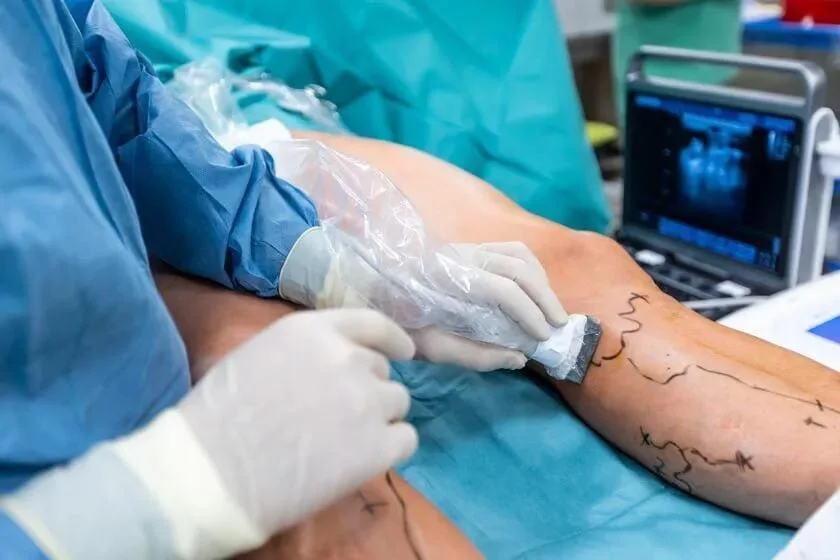
The surgical intervention is performed under local or general anesthesia depending on the extent and method. The operation takes 30 to 60 minutes, after which a compression bandage is applied. If necessary, phlebectomy is supplemented with crossectomy — ligation of the vein at the point where it joins a deep vein.
Recovery after surgical treatment of varicose veins
Rehabilitation after phlebectomy is carried out on an outpatient basis. Most patients return to normal life within 1–2 days after the operation. A month later, a follow-up examination with a phlebologist is performed, including ultrasound monitoring.
Important! In the first weeks, compression garments must be worn, intense physical activity should be limited, and saunas and steam baths avoided. The doctor draws up an exact recovery plan individually at the appointment.
Advantages of treatment at Helyos Medical Center
Helyos Medical Center offers a full cycle of care for varicose vein disease — from diagnostics and consultation with a phlebologist through to surgical intervention and rehabilitation at an affordable price. The specialists work according to modern treatment protocols, and an individual program is selected for each patient based on their personal needs.
To find out how much the operation costs and to book an appointment with a phlebologist, call +380670000150 or use the form on the website. Consulting a doctor at the first symptoms of varicose veins is the best way to preserve the health of your veins for years to come.