What is a cataract?
A cataract is a clouding of the lens, the eye’s natural optical element. As the clouding progresses, less light reaches the retina: vision may become less sharp, and patients often report a veil over the eye, increased sensitivity to bright light, and difficulty reading or driving.
Medication does not clear a lens that has already become cloudy — cataract is treated surgically.
When is the surgery performed?
The timing is determined by the ophthalmologist. It depends on the degree of clouding, the condition of the eye, and how much the change in vision affects the patient’s daily life.
There is no need to wait for a cataract to “ripen”: the doctor sets the timing individually.
Who may be advised to have the surgery?
Phacoemulsification may be considered:
- with a confirmed diagnosis of cataract
- when reduced vision interferes with everyday life or work
- when the clouded lens makes it difficult to examine or treat other eye conditions
- in accompanying conditions where removing the lens is appropriate in the doctor’s judgement
The final decision is made by the ophthalmologist based on the results of the examination.
How is phacoemulsification performed?
The operation is performed under local anaesthesia. Through a micro-incision, the material of the clouded lens is broken up with ultrasound and removed from the eye, while the capsular bag is preserved.
An intraocular lens with individually calculated optical parameters is placed into the capsular bag. After the procedure the doctor assesses the condition of the eye and gives recovery instructions.
Which intraocular lenses are used?
The type of lens is selected individually and depends on the condition of the eye, any accompanying conditions, the patient’s visual needs and the doctor’s recommendations.
The ophthalmologist explains the available options during the consultation.
Preparation
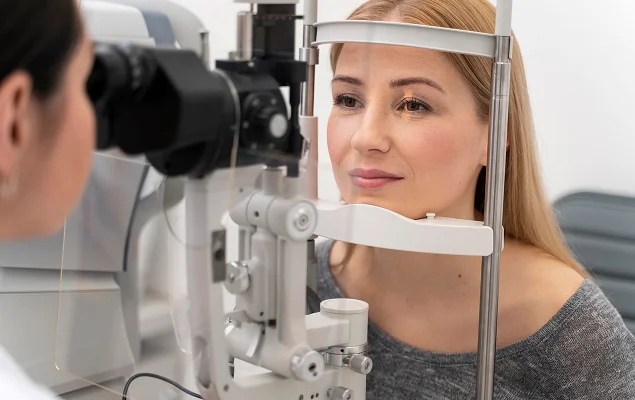
A comprehensive ophthalmic examination is carried out before surgery. The doctor measures the eye parameters needed to calculate the lens, assesses the retina and identifies any contraindications.
If there are accompanying conditions, a consultation with other specialists may be required.
Recovery after surgery
Recovery times vary from patient to patient. The doctor provides instructions on activity, the use of prescribed medication, eye care and restrictions during the first period after the procedure.
Follow-up examinations at the intervals set by the ophthalmologist are essential.
Why choose Helios?
At Helios the examination, the operation and the post-operative follow-up all take place in one medical centre. The treatment plan is determined by the ophthalmologist individually after an examination.
Need an ophthalmologist’s consultation?
Book an appointment at Helios. The doctor will examine you, order additional diagnostics if required, and determine the most appropriate treatment plan.
The information on this page is for general guidance only and does not replace a consultation with a doctor. Indications, contraindications and the method of treatment are determined individually after a medical examination.