Photo of Alexander Vasilyevich Gubarik

Alexander Vasilyevich Gubarik

Doctor
Work Experience: 32 years
Specialty:Honored Doctor of Ukraine, Orthopedic Surgeon
Specialization: Orthopedic traumatologist, Surgeon
Work expirience:32 years
Education:

Graduated in 1996 from Dnipropetrovsk State Medical Academy, specialty – General Medicine, qualification – Physician.


Since 2009, he has been the head of the Department of Orthopedics and Traumatology No. 2 (major joint endoprosthetics) at the Mechnikov Dnipropetrovsk Regional Clinical Hospital.


Completed clinical residency in Orthopedics and Traumatology in 2003.


Performs over 150 major joint surgeries annually.


Member of the Dnipropetrovsk Association of Orthopedic Traumatologists and the All-Ukrainian Association of Joint Endoprosthetics. Member of EFORT (European Federation of National Associations of Orthopaedics and Traumatology).


Participated in EFORT conferences in 2009, 2012, and 2015.


Completed advanced training in hip and knee surgery in Bad-Mergentheim, Germany.


Directions of Treatment:
Orthopedic traumatologist in Dnipro
Joint Replacement Surgery in Dnipro
Fixation of fractures
Surgical treatment of valgus foot deformity
Osteotomy
Arthroscopy
Metal osteosynthesis of fractures
Arthrodesis
Surgical treatment of tendon rupture
Surgical treatment of coxarthrosis
Surgical treatment of padagra
Meniscectomy
Meniscus stitching
Revision arthroplasty
Removal of protruding endoprostheses

Reviews

Dmytro Kolomieitsev
19.12.2024
He underwent surgery with Alexander Vasilievich Gubarik. The operation is quite complex - knee replacement. Within 3 hours after the operation I was back on my feet. Doctor from God, well done. Thank you very much. Special thanks to the nurses - service and attention 24 hours a day, nice, friendly and caring. I was pleasantly surprised by the post-operative rehabilitation - pro!!! Once again, many thanks to all the medical staff of the Helios clinic.Very friendly atmosphere and very professional!
Klavdia Tkachenko
19.12.2024
Many thanks to Alexander Vasilyevich Gubarik, all the nurses, managers, administrators and orderlies. The attitude is more than caring and attentive."Helios" is very comfortable, cozy and modern, just wonderful!
Alla Soldatova
19.12.2024
Alexander Vasilyevich Gubarik and the entire medical staff of the Helios Centre are professionals from God.At the Helyos is clean and comfortable at the highest level.Thank you and I recommend you to everyone!
Valentina Stepanyuk
15.12.2024
Hello!I would like to express my gratitude to the Centre of Medicine and Rehabilitation ‘Helios’(Dnipro) for a comfortable stay before surgery, during and during rehabilitation.Cleanliness, attentiveness, clarity in the work of medical staff.Special thanks to Honoured Doctor of Ukraine, orthopaedic traumatologist of the highest category.Gubarik Alexander Vasilievich.VERY, VERY!!!!! A good doctor as a specialist and as a person, very good and respectful attitude to patients. It is necessary to find such a doctor, very few I met such excellent doctors!!!!Thank you, wonderful doctor,For your hard and glorious work.I wish you strength and patience,May the years go on happily.I bow to you for your work,For your knowledge, for your talent,You are a doctor from God, it's clear to everyone,You're a real diamond.Thank you all! Health and prosperity!
Nila
04.11.2024
I would like to express my gratitude Helyos, medical staff and in particular to Oleksandr Vasilievich Gubarik for his professionalism and humanity, for responsiveness and support. The war touched our family not only with the loss of our home, but also with the loss of movement on my legs, thanks to Oleksandr Vasilievich I can walk again. I will not stop saying thank you for your labour. Prosperity, prosperity, strength, patience and peaceful skies!

Make an appointment
Enter your full name
Enter your phone number
Choose a specialist
Choose a specialist
Choose a branch
Choose a branch
Photo of Alexander Vasilyevich Gubarik
News
All news
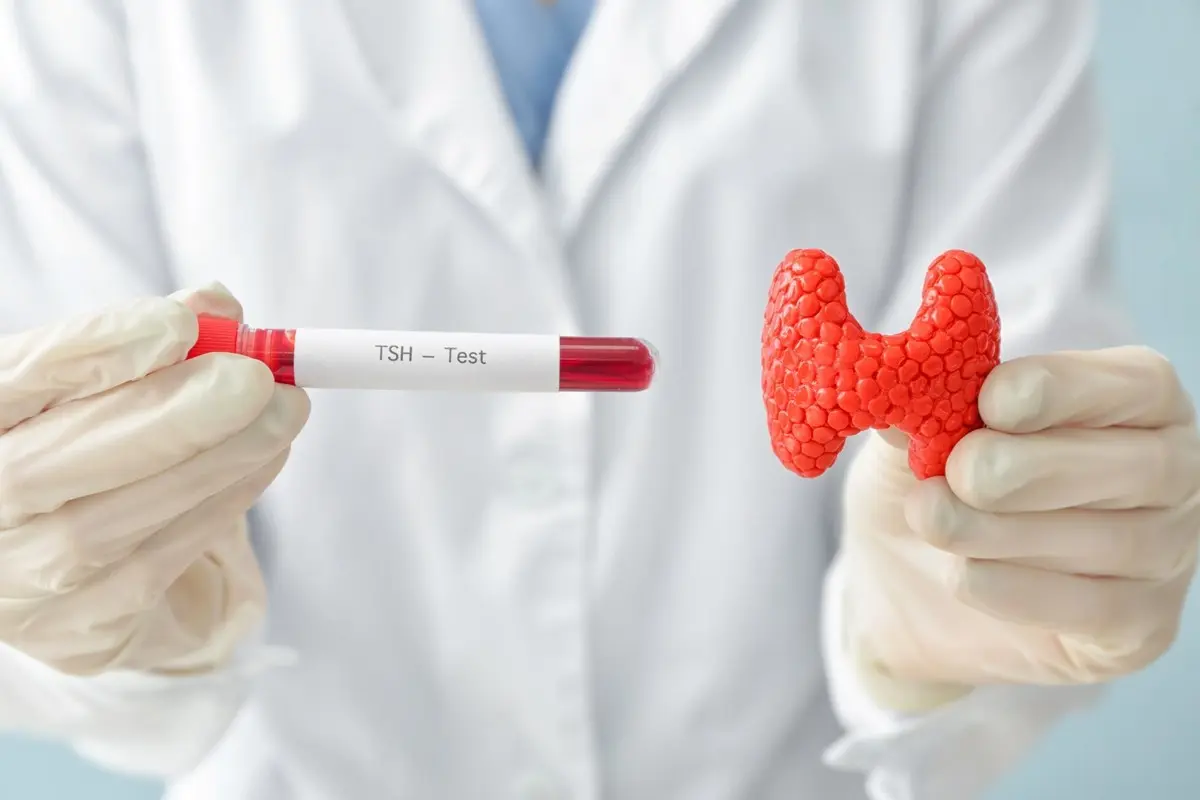
Thyroid-Stimulating Hormone (TSH

The thyroid gland plays a vital role in the functioning of the entire body by regulating metabolism, energy balance, and the activity of the cardiovascular and nervous systems. One of the key indicators of thyroid function is the thyroid-stimulating hormone (TSH). A TSH blood test helps doctors assess how well the thyroid gland is working and detect potential disorders at an early stage.

At the Helyos Medical Center, patients can undergo laboratory testing, have a thyroid ultrasound, and receive a consultation with an endocrinologist for an accurate diagnosis and personalized treatment plan.

What Is Thyroid-Stimulating Hormone (TSH) and What Does It Do?

Thyroid-stimulating hormone (TSH) is produced by the pituitary gland and regulates the function of the thyroid gland. It stimulates the production of thyroxine (T4) and triiodothyronine (T3), hormones that affect nearly every organ and system in the body.

When thyroid hormone levels decrease, the pituitary gland produces more TSH to stimulate the thyroid. Conversely, when T3 and T4 levels are too high, TSH production decreases. This is why a TSH blood test is considered one of the most important methods for evaluating endocrine system function.

Normal TSH Levels in Women, Men, and Children

Reference ranges may vary slightly depending on the laboratory and the testing method used. In most cases, the normal TSH range for adults is approximately 0.4–4.0 mIU/L.

TSH levels can be influenced by:

  • age;
  • sex;
  • pregnancy;
  • certain medications;
  • underlying medical conditions.

During pregnancy, normal TSH values change, especially in the first trimester. Therefore, test results should always be interpreted by a healthcare professional.

In children, TSH levels also vary with age. Newborns typically have higher TSH levels, which gradually decrease and approach adult reference values as they grow.

When Should You Get a TSH Test?

A doctor may recommend a TSH test if you experience symptoms that may indicate thyroid dysfunction.

These symptoms include:

  • persistent fatigue;
  • drowsiness;
  • sudden weight changes;
  • dry skin;
  • hair loss;
  • irregular heartbeat;
  • excessive sweating;
  • insomnia;
  • irritability;
  • difficulty conceiving.

A TSH test is also commonly recommended during pregnancy, when planning pregnancy, to monitor thyroid disease treatment, and as part of routine preventive health check-ups.

Causes of High and Low TSH Levels

An elevated TSH level most commonly indicates an underactive thyroid gland (hypothyroidism). Possible causes include autoimmune diseases, iodine deficiency, the effects of thyroid surgery, or treatment with certain medications.

A low TSH level may occur in hyperthyroidism, a condition in which the thyroid gland produces excessive amounts of thyroid hormones. Changes in TSH levels may also be associated with pituitary disorders, severe stress, or the use of certain medications.

TSH test results should always be interpreted together with T3 and T4 levels, clinical symptoms, and the findings of additional diagnostic tests.

How to Prepare for a TSH Blood Test

To obtain the most accurate results, it is recommended to:

  • have your blood drawn on an empty stomach;
  • avoid intense physical activity the day before the test;
  • avoid alcohol for 24 hours before the test;
  • inform your doctor about all medications you are taking;
  • whenever possible, have follow-up blood tests performed at the same time of day.

Following these recommendations helps ensure the most reliable laboratory results.

What Do Abnormal TSH Levels Mean and When Should You See an Endocrinologist?

An abnormal TSH level is not a disease itself but rather an indicator of a possible endocrine disorder. To determine the underlying cause, your doctor may recommend additional blood tests, a thyroid ultrasound, and other diagnostic procedures.

You should consult an endocrinologist if you experience symptoms of thyroid dysfunction, receive abnormal thyroid test results, or have a family history of endocrine disorders. Children with suspected thyroid problems should be evaluated by a pediatric endocrinologist.

Conclusion

Thyroid-stimulating hormone (TSH) is one of the most important indicators of thyroid function. A timely TSH blood test can detect thyroid disorders before noticeable symptoms develop, allowing treatment to begin at an early stage. Regular preventive check-ups, consultations with an endocrinologist, and modern diagnostic methods help maintain endocrine health and reduce the risk of developing serious thyroid and hormonal disorders.