Transvaginal Ultrasound: What It Is and How It Is Performed
Reviewed by Dyakova Valentina Nikolaevna, Gynecologist - oncologist, Obstetrician-gynecologist, Oncologist, Oncologist, Surgeon of the highest category. updated: 18 September 2025
Transvaginal Ultrasound: What This Examination Is and Which Organs It Helps Assess
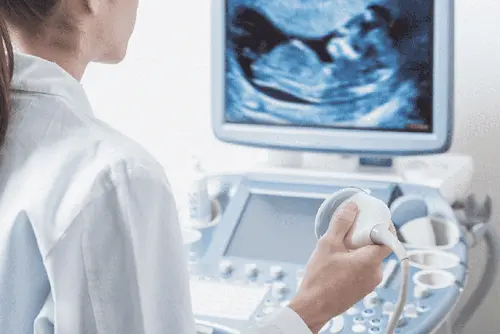
Transvaginal ultrasound is a method of ultrasound diagnostics of the pelvic organs, in which a special vaginal probe is inserted directly into the vagina. Because the probe sits close to the organs being examined, the doctor obtains a clear image of the uterus, ovaries, fallopian tubes and surrounding tissues. Compared with transabdominal ultrasound, performed through the abdominal wall, a transvaginal exam gives a more detailed picture and does not require a full bladder.
During the examination, doctors assess the size and structure of the uterus, endometrial thickness, the condition of the ovaries, and the presence of cysts, polyps, fibroids and other formations. It is one of the most informative methods in gynecological diagnostics, ordered during routine check-ups, when symptoms are present, or to monitor early pregnancy.
Why Transvaginal Ultrasound Is Prescribed: Main Indications and Diagnostic Capabilities
A doctor refers a patient for transvaginal ultrasound as part of a routine check-up or due to symptoms — lower abdominal pain, cycle irregularities, bleeding between periods, or difficulty conceiving.
| Indication | What Can Be Assessed During the Exam | Conditions It Helps Detect |
|---|---|---|
| Lower abdominal pain | Condition of the uterus, ovaries, free fluid in the pelvis | Inflammatory processes, cysts, ectopic pregnancy |
| Menstrual cycle disorders | Endometrial thickness and structure | Endometrial hyperplasia, polyps |
| Pregnancy planning, infertility | Ovulation, patency of pelvic structures | Causes of difficulty conceiving |
| Early pregnancy | Location of the gestational sac, embryo heartbeat | Ectopic pregnancy, risk of miscarriage |
| Suspected mass | Size, contours and structure of formations | Ovarian cysts, uterine fibroids |
If an ovarian cyst is found on the scan, the patient may need gynecological surgery. In a planned setting, such a formation is removed as part of gynecological surgery, while an acute condition with severe pain may require emergency gynecology care.
When It Is Best to Have a Transvaginal Ultrasound Depending on the Purpose of the Exam and the Day of the Cycle
Optimal Timing for Routine Diagnostics of the Pelvic Organs
For a routine assessment of the endometrium and ovaries, days 5 to 10 of the cycle — right after menstruation ends — are considered optimal. At this time, the endometrium is thin, allowing a more accurate assessment of its structure and any abnormalities.
Features of the Exam During Pregnancy, Ovulation and Menstruation
If the goal is to assess ovulation or ovarian reserve, the exam is performed mid-cycle, around days 12–16. A transvaginal ultrasound is also possible during menstruation, although some patients find it less comfortable due to bleeding. In early pregnancy, the exam confirms the pregnancy and determines its location and gestational age.
How to Prepare for a Transvaginal Ultrasound
The procedure requires no complex preparation. Unlike transabdominal ultrasound, there is no need to fill the bladder — on the contrary, a moderately empty bladder provides better visualization. Before the exam, normal hygiene is sufficient, and it helps to bring a towel. If a patient is taking medication that affects the cycle, she should inform the doctor in advance.
How Transvaginal Ultrasound Is Performed: Procedure Steps and What the Patient May Feel
The patient lies on the examination table with knees bent. The doctor inserts a thin vaginal probe, covered with a disposable sheath and gel for smoother movement. The procedure usually takes 10–15 minutes and in most cases causes no pain — only mild discomfort may be felt. The image appears on the monitor in real time, allowing the doctor to assess the uterus and ovaries immediately and discuss the results with the patient.
How Often Transvaginal Ultrasound Can Be Done and Whether It Has Contraindications
Transvaginal ultrasound is considered a safe method with no limit on how many times it can be performed — it can be repeated several times within one cycle, for example to monitor ovulation. There are few contraindications: the procedure is usually not performed on patients who are not sexually active (alternative methods are used instead), and it may be avoided during certain acute vaginal inflammatory conditions.
If the scan reveals a formation suspected of being malignant, the patient may be referred to a specialized department — oncogynecology — where specialists determine the further diagnostic and treatment plan.
Regular transvaginal ultrasound is an important part of preventive check-ups that helps detect changes in the pelvic organs in time and protect women’s health.

Was this article helpful?
Thank you for rating.
Still have questions?
Leave your details and a doctor will call you back.