Vasectomy: Indications and Specifics of Male Sterilization.
At the Helios Medical Center, qualified surgeons perform vasectomies using state-of-the-art equipment and effective treatment and recovery protocols. We provide a comfortable outpatient environment and personalized attention to every patient. This article explores the procedure in greater detail.
What Is a Vasectomy, and When Is Male Sterilization Performed?
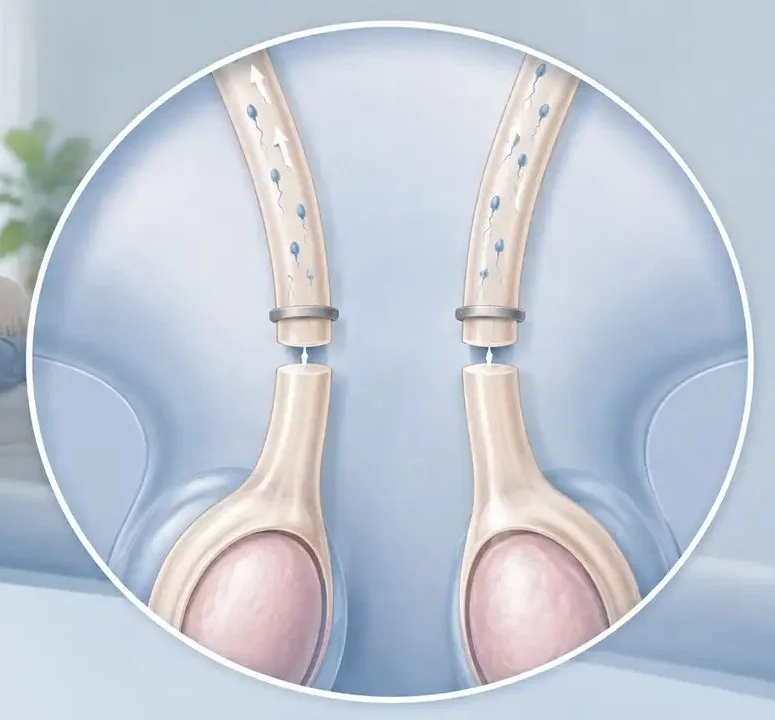
A vasectomy is a surgical procedure that prevents a man from reproducing by severing the vas deferens (the ducts that carry sperm), ensuring that sperm are no longer present in the ejaculate. These ducts are a paired component of the male reproductive system; they are muscular tubes that extend from the epididymis to the duct of the seminal vesicle, transporting sperm toward the prostate gland. The ducts are ligated (tied off) in the upper section of the scrotum.
The prostate gland produces a secretion that supports sperm motility and protection, and facilitates the ejaculation process. Following a vasectomy, the body continues to produce this secretion, and ejaculation occurs as usual—but the fluid no longer contains sperm. A single procedure achieves the desired outcome without affecting the patient’s hormonal balance. Testosterone levels, sexual desire, and the ability to achieve an erection remain unchanged after the procedure.
In modern medicine, a vasectomy is considered a safe and highly effective form of male contraception, offering a 99.9% success rate in preventing unintended pregnancy in a partner. Because it is a permanent, irreversible procedure, it should be understood as a form of male sterilization. There is a microsurgical procedure designed to restore the patency of the ducts; however, it is complex and has a low success rate if performed more than 3–5 years after a vasectomy.
Primary indications for a vasectomy
The primary indication for a vasectomy is a man’s voluntary decision not to exercise his reproductive function—either because he does not wish to have children in the future, or because he chooses not to have children at all, perhaps due to the risk of passing on genetic diseases. A man may also choose this procedure to protect his partner from conception, which, in some cases, could pose a risk to the woman’s health.
How the vasectomy procedure is performed
Following a consultation with a urological surgeon, a review of the patient’s medical history, and an assessment for any contraindications, a diagnostic evaluation is scheduled. This includes an examination of the genital area, an ultrasound of the scrotum, and laboratory tests. The patient must provide written consent for the vasectomy, which can be performed under either general or local anesthesia, depending on the patient’s preference.
The surgery lasts approximately 30 minutes. The surgeon makes small incisions (about 5 mm) in the scrotum to access and block the vas deferens. The incisions are then closed using sutures or surgical adhesive. After the procedure, the patient remains at the clinic for a few hours while the anesthesia wears off. The physician will examine the patient, provide post-operative instructions, and schedule a follow-up consultation for one month later.
Benefits and potential consequences of male sterilization
A vasectomy is a quick procedure that causes only minor, short-term discomfort. The puncture-based technique, in particular, is associated with a low rate of complications. In rare cases, minor bruising may occur in the surgical area, and semen may contain traces of blood—both of which are considered normal. It is important to follow the doctor’s recommendations regarding hygiene and activity restrictions during the first few days after the procedure to prevent infection.
Recovery after a vasectomy and medical advice
Recovery following a vasectomy is generally straightforward. For two days after the procedure, the patient should avoid strenuous physical activity, refrain from sexual activity, take any medications prescribed by the urologist, and wear a supportive bandage or snug-fitting underwear to keep the testicles immobilized. You may shower the day after the vasectomy; however, you should avoid baths and saunas until the skin has completely healed.
It takes approximately 25 ejaculations for the procedure to become fully effective. For the first two months—and until a semen analysis (spermogram) has been performed as directed by your doctor—the use of contraception during sexual intercourse is recommended.
Modern vasectomy techniques and their features
There are two common techniques for performing a vasectomy:
Traditional: Incisions are made using a scalpel, and several stitches are applied; these may be dissolvable or require removal by a physician at a later date. There is a potential risk of hematomas (bruising) or bleeding.
No-scalpel: Small punctures are made using a specialized instrument. This approach is highly effective, carries a lower risk of complications, and does not cause bleeding.
At the Helios Medical Center, vasectomies and other genital surgical procedures are performed by experienced physicians in accordance with modern medical protocols.

Was this article helpful?
Thank you for rating.
Schedule an appointment with a doctor
-
 Kryvoruchko Yevhen Vasylovych
Phlebologist, Surgeon
Work Experience: 22 years
-
 Dmytro Mykolaiovych Lukyanenko
Pediatric Surgeon, Pediatric Orthopedic Traumatologist
Work Experience: 23 years
-
 Rudenko Yana Yuriyivna
Surgeon
Work Experience: 6 years
-
 Dyakova Valentina Nikolaevna
Gynecologist, Oncologist, Oncologist, Obstetrician-gynecologist, Surgeon, Oncogynecologist
Work Experience: 45 years
Still have questions?
Leave your details and a doctor will call you back.