Rehabilitation After a Fracture at Home: Exercises and Loading Regimen
Reviewed by Viktor Leonidovich Kovalenko, Physical and Rehabilitation Medicine Physician updated: 3 November 2026
The cast is off, but the leg is thin, the foot swells, and stepping on it is scary. This is a normal state after a fracture: the bones have healed, but the muscles have weakened and the joints have lost mobility. Let’s look at what to do after a leg cast is removed, when to step on the leg and how to work it without causing harm.
When to Start Rehabilitation After a Leg Fracture and How to Control the Load
Rehabilitation begins not after the cast is removed but earlier: while the leg is in a dressing, you can tense the muscles, move the toes and raise the limb. This helps to reduce swelling, maintain muscle strength and lower the risk of complications. The main rule is not to cause pain: exercises should be comfortable, and the load should be measured. After the cast is removed, the load is increased gradually, according to the doctor’s plan.
What Determines the Recovery Time and Permission to Step on the Leg
When you can step on the leg after the cast is removed is determined only by the trauma doctor based on the X-ray and examination. The timing depends on the location and type of fracture, age, whether there was an operation, and accompanying illnesses. If the fracture was simple and is healing well, loading is allowed immediately or after a few weeks. After an operation with metal fixation, the regimen is chosen individually.
How to Recognize Excessive Load by Pain, Swelling and Limited Movement
Signals that the load is too great:
- pain that gets worse and does not go away after rest;
- swelling of the foot that does not go down by morning;
- limping and worsening mobility;
- redness and raised skin temperature.
In this case you need to reduce the load and see a doctor. Pain, swelling and redness in the shin area on one side are a reason to seek help urgently, since they may indicate thrombosis.
How to Work the Leg After the Cast Is Removed: Exercises for the Foot, Ankle and Muscles
The leg needs to be worked regularly, in short sessions of 10–15 minutes several times a day. Before the exercises you can take a warm foot bath if there is no severe swelling. You must not heat or steam the leg when there is inflammation and swelling, and massage and compresses should be agreed with the doctor. After the sessions, lay the leg above heart level for 15–20 minutes: this helps reduce swelling. If the foot swells in the evening, that is normal, but by morning the swelling should go down.
Exercises to Restore Mobility of the Foot and Ankle Joint
- Pull the foot toward you and away from you, 15–20 times.
- Rotate the foot in circles in both directions.
- “Draw” the letters of the alphabet in the air with the foot.
- Bend and straighten the toes, pick up small objects with the toes.
- Roll a ball with the foot while sitting.
Therapeutic Exercise to Strengthen the Shin Muscles and Gradually Return to Walking
To restore the muscles and circulation in the shin, you go in stages: first tensing the thigh and shin muscles while lying down, then rising onto the toes with support, shifting weight from leg to leg, walking with crutches and then with a cane. How to walk after the cast is removed? Start by relying on crutches, gradually increasing the load on the leg, and watch for the correct rolling of the foot from heel to toe. Do not rush to give up support: premature loading can lead to complications. If you want to walk the leg back into shape, increase the distance by 10–15% a day.
Nutrition and lifestyle are no less important. For the bone to heal, the body needs protein, calcium and vitamin D: dairy products, fish, eggs, meat, greens. Smoking slows bone healing, so it is better to give it up. Sleep with the leg raised, and do not neglect follow-up visits to the trauma doctor.
If after 2–3 weeks of exercises mobility does not improve, the pain does not go away, or the leg still cannot bear weight, do not put up with it: the doctor will adjust the plan, check whether there is displacement or delayed healing, and select other methods.
Which Physiotherapy Procedures and Restorative Methods Are Used After a Fracture
Exercises alone are sometimes not enough. The doctor may add physiotherapy and other methods.
| Rehabilitation method | Main goal | When it may be used | Restrictions |
|---|---|---|---|
| Therapeutic exercise | Restore mobility and strength | From the first days with the doctor’s permission | Without pain and overload |
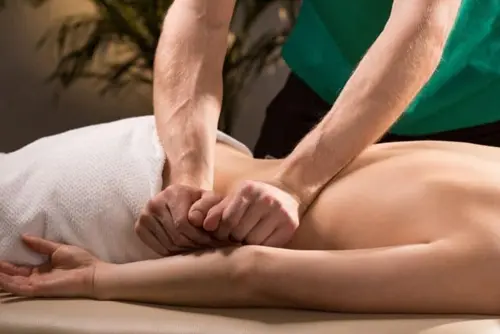
| Massage | Improve circulation, relieve swelling | After the cast is removed | Not allowed with thrombosis and inflammation |
| Magnetotherapy | Reduce swelling and pain | At an early stage | Not allowed with metal implants without approval |
| Electrical stimulation | Strengthen weakened muscles | After the cast is removed | Contraindicated in some heart diseases |
| Ultrasound and laser therapy | Improve metabolism and healing | As prescribed by a doctor | Not allowed in cancer |
How an Individual Recovery Plan After a Fracture Is Drawn Up at Helyos
A rehabilitation specialist assesses mobility, muscle strength, swelling and gait, and studies the X-ray and the discharge summary. On this basis a plan is drawn up: exercises, procedures, and the timing of the transition from crutches to walking. The plan is reviewed as recovery progresses. The center offers rehabilitation after fractures and injuries, as well as rehabilitation after musculoskeletal injuries. If the fracture was treated surgically, metal osteosynthesis of fractures requires a special loading regimen.
The Helyos Team and Equipment for Rehabilitation After Lower Limb Injuries
The Helyos rehabilitation center employs trauma doctors, rehabilitation specialists and physiotherapists. Modern equipment for therapeutic exercise and physiotherapy is used for the sessions. For more detail, see the page on rehabilitation after lower limb injuries.
Was this article helpful?
Thank you for rating.
Schedule an appointment with a doctor
-
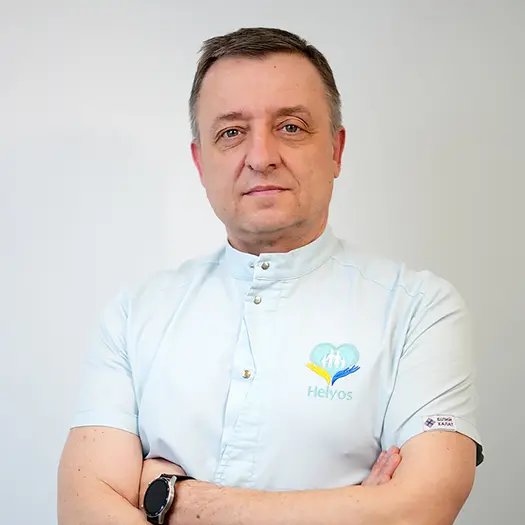 Moseichuk Konstantin Petrovich
Rehabilitation, Ergotherapy, Dr. FRM
Work Experience: 10 years
-
 Anna Anatolyevna Kiktenko
Physical Therapist, Ergotherapy, Dr. FRM, Massage Therapist, Rehabilitation
Work Experience: 8 years
-
 Shtaltovny Konstantуn Vladуmirovych
Ergotherapy, Dr. FRM, Massage Therapist, Rehabilitation, Physical Therapist
Work Experience: 5 years
Still have questions?
Leave your details and a doctor will call you back.