Achilles Tendon Rupture: Why It Often Happens on Ice
Reviewed by Andrii Hryhorovych Kushnirenko, Higher medical education updated: 5 November 2026
The Achilles tendon is the largest and strongest in the human body, but it is precisely this one that often suffers in winter. It is enough to slip on ice and sharply brace the foot to hear a pop and feel a blow to the back of the lower leg. Let’s look at why an Achilles rupture often happens on ice, and how to recognize and treat it.
Why an Achilles Tendon Rupture Often Happens on Ice
The Achilles tendon connects the calf muscles to the heel bone and is responsible for push-off when walking and running. On ice the foot slides, the person tries to keep their balance, and the calf muscles tense sharply. The load on the tendon at that moment is several times greater than usual. Cold makes tissues less elastic, and the slippery surface does not let you stand firmly on the foot.
The risk is higher in people aged 30–50 who rarely exercise, as well as with chronic inflammation of the tendon and with the use of certain antibiotics and hormonal drugs. The area 4–6 centimeters above the heel is damaged most often: the blood supply is poorer there.
Strain, Partial Tear and Complete Rupture of the Achilles: How the Injuries Differ
Injuries differ in severity: from a strain of the fibers to complete tearing off of the tendon.
| Type of injury | What happens to the tendon | Main symptoms | Urgency of seeking medical help |
|---|---|---|---|
| Strain | Some fibers are stretched, integrity is preserved | Pain and stiffness in the heel area, swelling | Consultation within a few days |
| Partial tear (incomplete rupture) | Some fibers are torn | Sharp pain, swelling, weakness when rising onto the toes | See a doctor within 1–2 days |
| Complete rupture | The tendon is torn, the ends separate | A pop, sharp pain, being unable to stand on tiptoe, a dip above the heel | Urgently, preferably in the first hours and days |
Symptoms of an Achilles Tendon Rupture After a Fall or Sudden Movement
The signs of an Achilles rupture are usually vivid. The injured person feels a sharp blow to the lower leg, as if someone had hit it with a stick or a stone, and hears a pop. Then pain, swelling and a bruise appear in the heel area. With a complete rupture, the person cannot rise onto the toes of the injured leg and walks putting weight on the whole foot. Above the heel you can feel a “dip” at the site of the rupture.
A partial tear of the Achilles tendon shows itself more mildly: a dragging pain, weakness and pain when rising onto the toes, but walking is possible. These symptoms cannot be ignored: a partial tear can become complete. How can you check for a rupture at home? Lying on your stomach, ask someone to squeeze the calf muscle: with an intact tendon the foot flexes downward, with a rupture it does not. This does not replace diagnosis by a doctor, but it helps you understand that you need to seek help urgently.
What to Do if You Tore Your Achilles on Ice
- Stop the load, do not step on the leg.
- Fix the foot in a “toes down” position, like a ballerina’s, with a bandage or splint.
- Apply cold through a cloth for 15–20 minutes.
- Raise the leg above heart level.
- See an orthopedic trauma doctor or go to an emergency trauma center as soon as possible.
You must not warm or massage the site of the rupture, try to “walk off” the leg, or inject painkillers near the tendon. The sooner diagnosis is carried out, the simpler the treatment.
How Damage to the Achilles Tendon Is Confirmed at Helyos
Examination by an Orthopedic Trauma Doctor and Assessment of Foot Function
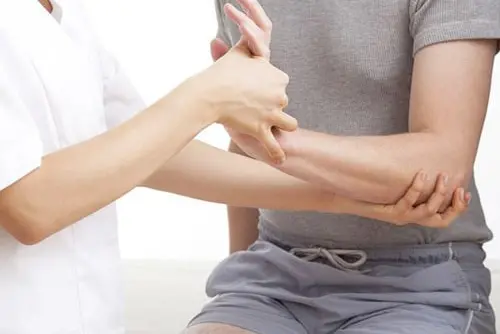
The doctor asks about the circumstances of the injury, examines the heel and lower leg, and feels the tendon. He checks whether the patient can rise onto tiptoe and performs the Thompson test: he squeezes the calf muscle and watches the movement of the foot. Appointments are given by specialists in orthopedics and traumatology.
Additional Diagnostics if a Complete or Partial Rupture Is Suspected
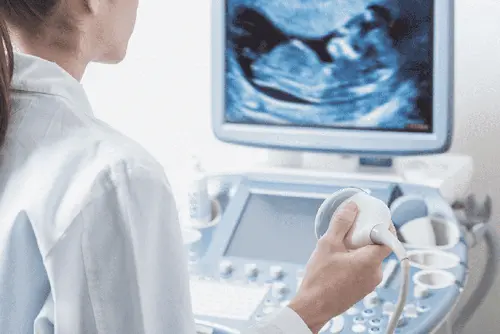
To determine the degree of damage, an ultrasound or MRI of the tendon is ordered: it shows the site of the rupture and the distance between the ends. CT is used when the picture is unclear, in repeated injuries or in preparation for surgery. An X-ray is needed to rule out a fracture of the heel bone or avulsion of the tendon together with a fragment of bone.
Treatment of an Achilles Tendon Rupture at Helyos
The treatment approach is chosen by the doctor, taking into account the type of injury, age, activity level and how soon the patient came in. Two paths are possible.
- Conservative treatment is indicated for a partial tear and some complete ruptures: the leg is fixed in a brace or cast in a “toes down” position, then the angle is gradually reduced. Treatment lasts 8–12 weeks and requires discipline.
- Surgical treatment is more often recommended to young and active patients with a complete rupture. The surgeon sutures the ends of the tendon using an open or minimally invasive method. For more detail, see the page on surgical treatment of tendon ruptures. A subcutaneous rupture without a wound is also treated either surgically or conservatively: the choice depends on the examination.
Surgery reduces the risk of re-rupture but does not rule out complications: infection and problems with wound healing. That is why the method is chosen individually within orthopedic surgery and traumatology.
Rehabilitation After an Achilles Tendon Rupture: Stages and Helyos Capabilities
How long does an Achilles take to heal? The tendon knits in about 6–12 weeks, but full recovery of strength takes 6–12 months. Rehabilitation goes in stages:
- first 2 weeks — protecting the tendon, immobilization, walking on crutches;
- weeks 2–6 — a brace with wedges, gradual loading of the leg;
- weeks 6–12 — exercises for flexibility and strengthening the shin muscles;
- 3–6 months — return to running and active life after the doctor’s permission.
You can go through recovery at the center of rehabilitation in traumatology and on the program of rehabilitation after musculoskeletal injuries.
Restoring Strength, Mobility and Correct Gait
There is no need to hurry: loading too early raises the risk of re-rupture, while staying immobile too long weakens the muscles. The rehabilitation specialist selects exercises to restore the mobility of the ankle joint, strengthen the calf muscles, and train balance and gait. Step-by-step loading helps you return to your usual life and reduces the risk of a repeat Achilles rupture.

Was this article helpful?
Thank you for rating.
Schedule an appointment with a doctor

Still have questions?
Leave your details and a doctor will call you back.